What’s in a period?
The art of measuring accurately.

What can your period tell you about your cycle?
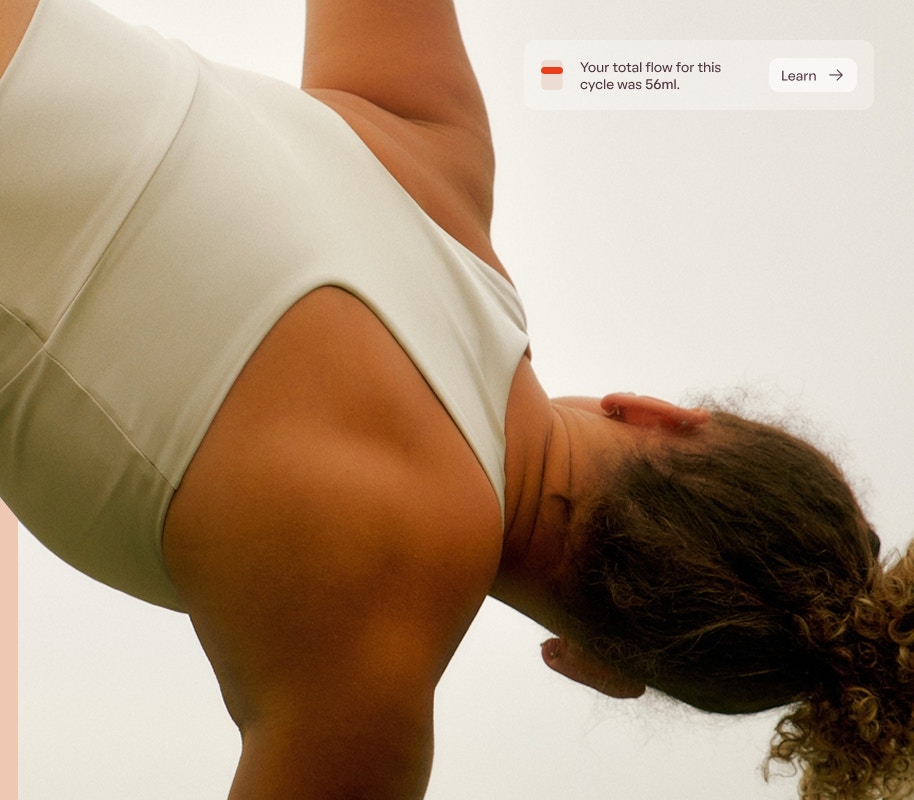
Your period flow can reveal important insights about your cycle, including volume, patterns, and changes over time that help you better understand what’s normal for your body. By tracking your flow, you can move beyond guesswork and start building a clearer picture of your menstrual health.
The art of measuring accurately
We’ve all been there: staring at our tracking app, wondering whether today’s period was “medium” or “heavy.” Trying to remember how many tampons or pads we went through. Asking ourselves if we changed too early, or if it really counted.
And then the bigger question: why do we even track our periods at all? Social media says we should, but is it actually worth the effort?
The short answer is, yes. Understanding your cycle more deeply is more than a wellness trend. It’s one of the simplest ways to understand what’s happening inside your body. So let’s clear up the guesswork and dig into why your period really matters.
Why our period matters
Your period is like a built-in report card, full of signals that often go unnoticed. When your body is under stress, whether from chronic or short-term illness, burnout, emotional strain, or stress from physical exertion, your reproductive system is one of the first to be affected. Research shows that during periods of high stress, the brain can suppress signals to the ovaries, which may lead to irregular or missed periods.¹
This is because hormones don’t act in isolation. Thyroid hormones, insulin, cortisol, and even melatonin all interact with oestrogen and progesterone, shaping how our cycle unfolds. In turn, shifts in reproductive hormones ripple outward, affecting other areas of our physical and mental wellbeing, such as mood, energy, sleep, recovery and more.²˒³
That means your menstrual cycle doesn’t just reflect what’s happening in your uterus. It’s a mirror of your overall wellbeing. Sometimes we know exactly why things feel off, but often, changes in your cycle can be an early sign that something deeper is going on.⁴
Why our period flow matters
One of the clearest, most measurable signals your menstrual cycle gives you is your flow. Flow can fluctuate from day to day and month to month, influenced by factors such as nutrition, stress, exercise, medication, and even travel.⁵ But before you can understand what those changes mean, it’s important to get familiar with your baseline.
“Normal” actually isn’t normal at all, it looks different for everyone — light for some, heavy for others. But what feels “normal” isn’t always healthy, and changes in flow can reveal underlying changes to your body, and in some cases, conditions that need to be addressed.⁶
What our flow can tell us
The foundation of understanding your period is knowing what’s typical for you. By tracking consistently over time, you start to see your own pattern, whether your flow tends to be light, average, or heavy. Once you’ve established this baseline, it becomes much easier to spot when something shifts and might deserve a closer look.⁷
Contrary to what we may have been told, there isn’t a single standard template for how a menstrual cycle should look. All of our cycles are unique. For one person, heavier bleeding might simply be how their body works, while for another, a lighter flow is completely natural. What matters most is knowing what’s typical for you. Without this baseline, it’s hard to tell whether what you’re experiencing is just a natural variation or something that could be linked to an underlying issue.⁴˒⁶
Everyday factors that shape our period flow
Of course, no cycle happens in isolation. Even when you know your “typical”, small changes in daily life can nudge your flow one way or another. A stressful deadline at work, a tweak in your diet, a new workout routine, illness, poor sleep, or even adjusting to a different environment can all subtly influence how much you bleed and when.⁵
Paying attention to your flow can help you spot what affects you most. For instance, some people notice “trigger foods”, ingredients that cause inflammation in their body, affecting their period. Others find that overexercising or pushing themselves too hard physically can lead to noticeable changes in flow. The more you track, the easier it becomes to connect the dots between lifestyle choices and how your period unfolds.⁵
Very light period flows
Sometimes a lighter flow is simply part of your natural rhythm. But if it’s consistently lighter than usual, it could be linked to hormonal imbalances, thyroid conditions, or the transition into perimenopause. For some, light bleeding may also be connected to conditions like polycystic ovary syndrome (PCOS).⁸˒⁹ Recognising this pattern is key to knowing when to seek advice. If you have measured your flow accurately, this information can help you get the right support.
Very heavy period flows
At the other end of the spectrum, heavier-than-usual bleeding can carry its own messages. It may signal low iron levels, fibroids, adenomyosis, or endometriosis, and sometimes it’s a side effect of medication. A good rule of thumb: if you’re soaking through a pad or tampon in less than two hours, it’s worth checking in with a healthcare professional.¹⁰ Measuring your flow accurately can provide clear evidence to help your healthcare provider give the right support.
Where Emm comes in
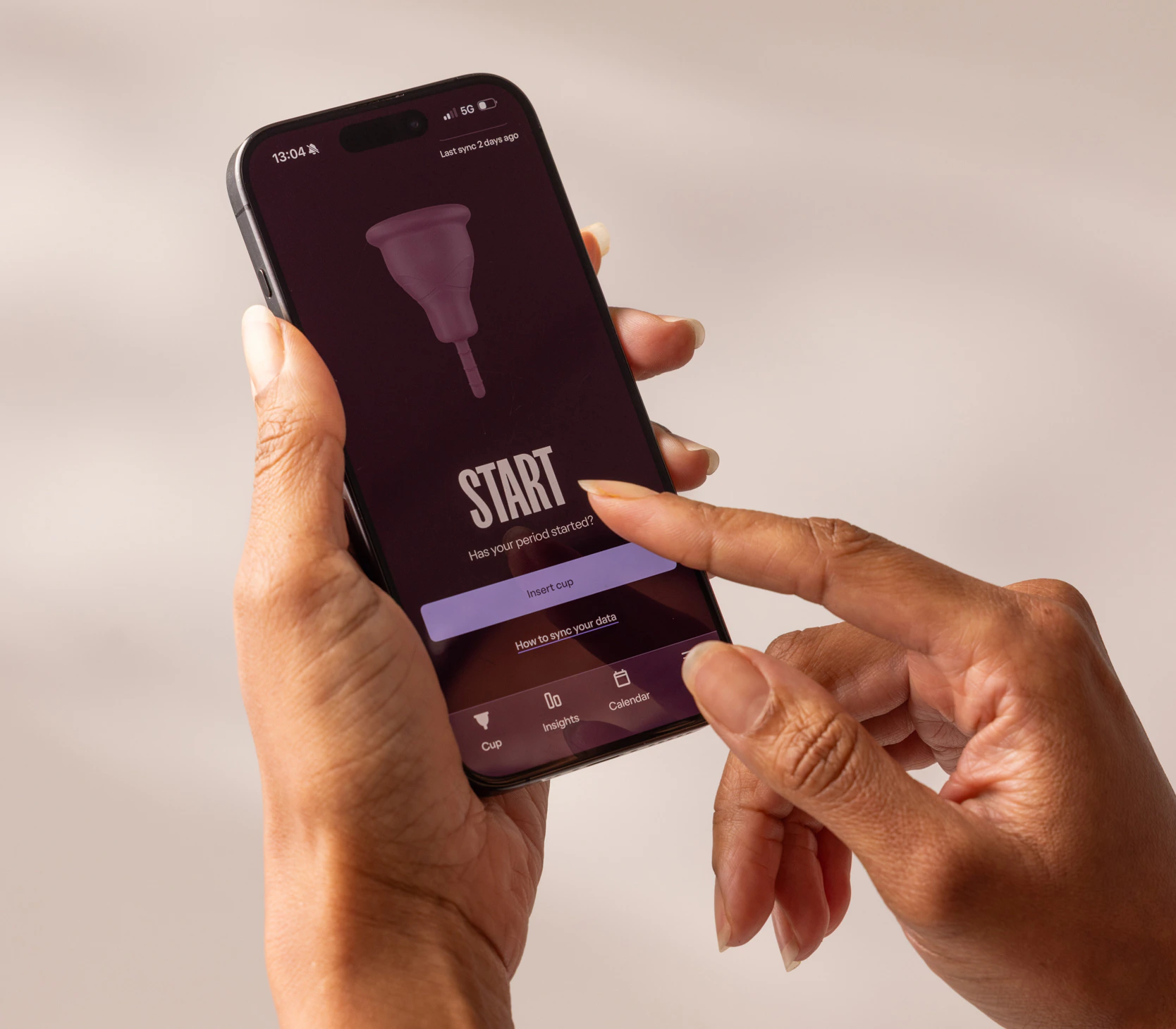
Traditionally, flow has been tracked with vague questions like “how many pads or tampons did you use?” — a method that’s subjective and imprecise.¹¹ Emm changes that. With a comfortable menstrual cup equipped with smart sensors, it measures your flow in millilitres, giving you data that’s clear, accurate, and actionable.
Combined with cycle frequency, duration, and regularity, Emm provides a much clearer picture of your menstrual health.
A first of its kind, the Emm cup and app support you every step of the way, helping you understand your “typical range”, spot changes to your cycle, and know when it’s time to seek professional advice.
A vital sign
Your period isn’t just an inconvenience, it’s one of the clearest, cleverest signals your body gives you. By tracking it with accuracy, you move past guesswork and start spotting patterns that matter. Your flow is a vital sign, and noticing its shifts can tell you more than you think.
References:
1. Liu Y, Zhang C, Wu H, Zhao J. Chronic stress and ovulatory dysfunction: A review. Front Endocrinol (Lausanne). 2022;13:952866.
2. Critchley HOD, Maybin JA, Armstrong GM, Williams ARW. Physiology of the endometrium and regulation of menstruation. Physiol Rev. 2020;100(3):1149–1179.
3. Baker FC, Driver HS. Circadian rhythms, sleep, and the menstrual cycle. Sleep Med. 2007;8(6):613–622.
4. American College of Obstetricians and Gynecologists. Committee Opinion No. 651: Menstruation as a vital sign. Obstet Gynecol. 2015;126(6):e143–e146.
5. De Souza MJ, Williams NI. Physiological aspects of energy deficiency in exercising women. Hum Reprod Update. 2004;10(5):433–448.
6. Fraser IS, Critchley HOD, Broder M, Munro MG. FIGO definitions of normal and abnormal uterine bleeding. Semin Reprod Med. 2011;29(5):383–390.
7. Symul L, Wac K, Hillard PJA, Salathé M. Assessment of menstrual health via mobile tracking. npj Digit Med. 2019;2:64.
8. Klein DA, Poth MA. Amenorrhea: Diagnosis and management. Am Fam Physician. 2013;87(11):781–788.
9. National Institute for Health and Care Excellence. Polycystic ovary syndrome. NICE guideline [NG23]. 2018.
10. National Institute for Health and Care Excellence. Heavy menstrual bleeding. NICE guideline [NG88]. 2018.
11. Magnay JL, et al. Menstrual blood loss measurement: A review. BJOG. 2018;125(4):418–428.