The 'Missed' Vital Sign
What if your period was more than just an inconvenience?

Why is your period considered a vital sign?
Just like heart rate or blood pressure, your menstrual cycle can offer early signals about what’s happening internally. Making it an important, but often overlooked, indicator of overall health.
What if your period was more than just an inconvenience?
Many of us are taught to think about our period as something that simply happens. It arrives, we manage it, and then we move on.
If something changes — it’s late, heavier than usual, unusually painful, or disappears altogether — we’re often reassured that it’s normal. Stress. Hormones. Life.
But what if your menstrual cycle isn’t just something to tolerate? What if it’s one of the clearest windows into your overall health? This is exactly how scientists and clinicians are increasingly beginning to understand period health.¹
Your menstrual cycle does more than control reproduction
The menstrual cycle is one of the most dynamic biological systems in the body. Each cycle involves tightly coordinated changes across hormones, tissues, and cellular signalling pathways. Unlike most systems, it continuously builds up and breaks down in response to internal and external signals.
While it’s often discussed in terms of fertility, the menstrual cycle reflects much more than reproductive function alone. Fluctuations in hormones such as oestrogen and progesterone influence immune function, metabolism, bone health, cardiovascular health, mood, and energy levels.²
Because of this, changes in your cycle can sometimes be one of the earliest signs that something else in the body is shifting, long before symptoms show up elsewhere.
Why the menstrual cycle is being called a vital sign
In medicine, vital signs are measurements that offer insight into how well the body is functioning. Heart rate, blood pressure, respiratory rate, and body temperature are routinely monitored because they reflect underlying physiological health.³
Increasingly, researchers are arguing that the menstrual cycle belongs in this category. Cycle regularity, ovulation patterns, bleeding duration, and flow characteristics can all provide information about hormonal balance, energy availability, stress load, and overall systemic health.⁴
When the cycle is consistently disrupted; becoming irregular, unusually painful, very heavy, or absent — it may be the body’s way of signalling that something needs attention. This doesn’t mean every variation is a problem, but persistent changes can be meaningful.⁴
What your period can tell you about your health
Looking at the menstrual cycle through this lens shifts the question from “Is this normal?” to “What might this be telling me?”.
Changes in cycle length or missed periods can sometimes reflect low energy availability, chronic stress, or hormonal suppression. Heavier or prolonged bleeding may be linked to inflammation, fibroids, or hormonal imbalance. Severe pain that interferes with daily life is not something to simply push through, it can indicate underlying conditions that deserve investigation.⁵˒⁶
Moving from period tracking to period understanding
Tracking your period is a start. Understanding it is where things really change.
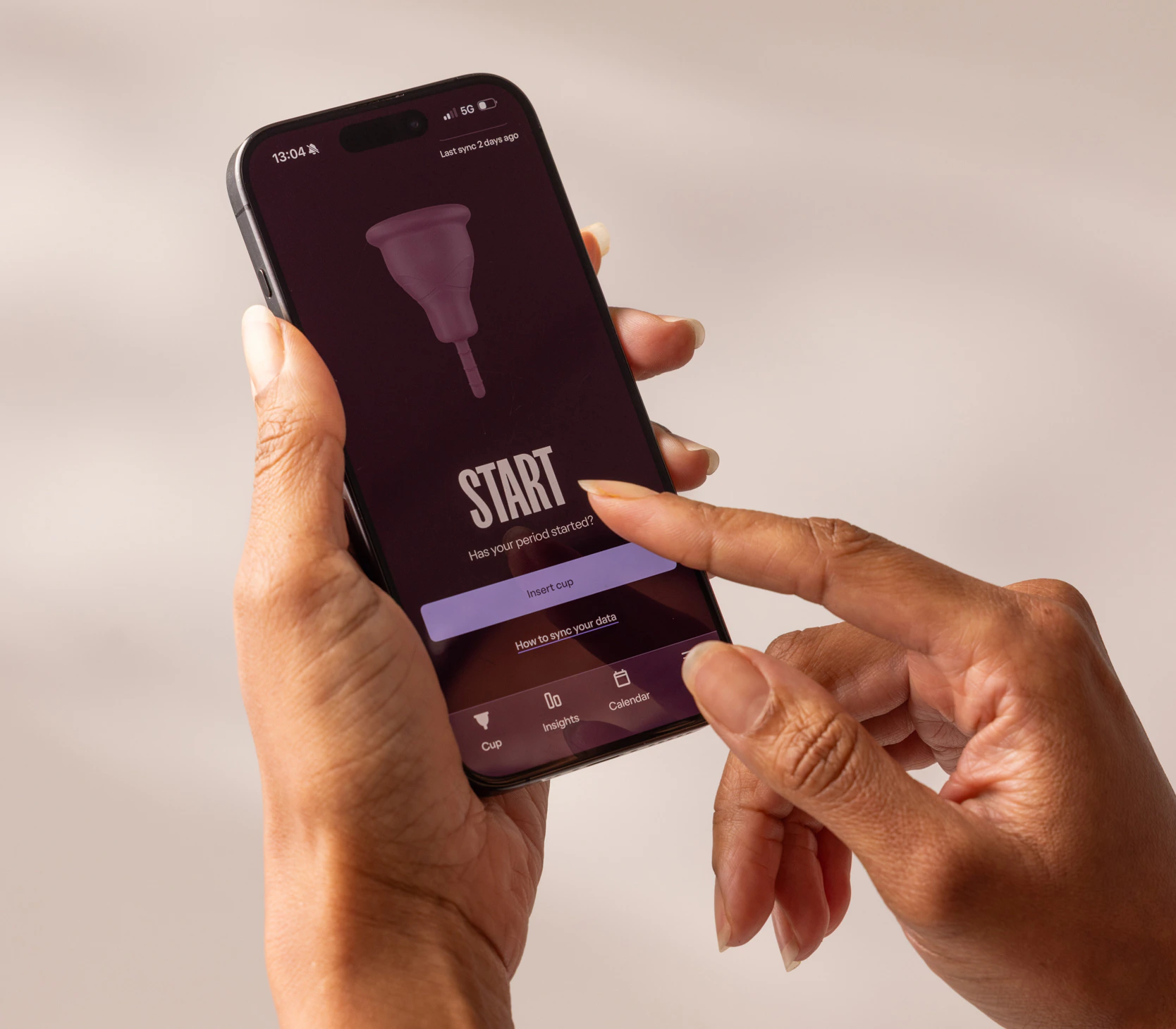
When periods are measured accurately and consistently over time, patterns become visible. Flow volume, cycle length, and regularity stop being vague impressions and start becoming meaningful signals.
This doesn’t mean over-analysing every cycle. It means building a clearer picture of how your body responds to stress, lifestyle changes, training, illness, or recovery.
Your period is a vital sign worth listening to
For too long, menstrual health has been minimised or separated from broader health conversations. Paying attention to it isn’t about pathologising every change, it’s about recognising that your cycle carries information. Information that can support understanding, prompt meaningful questions, and help you feel more connected to your own health.
Your period isn’t just something to manage. It’s something worth listening to.
References:
1. Alvergne A, Högqvist Tabor V. Is female health cyclical? Evolutionary perspectives on menstruation. Trends Ecol Evol. 2018;33(6):399–414.
2. Critchley HOD, Maybin JA, Armstrong GM, Williams ARW. Physiology of the endometrium and regulation of menstruation. Physiol Rev. 2020;100(3):1149–1179.
3. Cleveland Clinic. Vital signs [Internet]. Cleveland Clinic; 2023 [cited 2025]. Available from: https://my.clevelandclinic.org/health/diagnostics/10061-vital-signs
4. American College of Obstetricians and Gynecologists. Committee Opinion No. 651: Menstruation in girls and adolescents: using the menstrual cycle as a vital sign. Obstet Gynecol. 2015;126(6):e143–e146.
5. National Institute for Health and Care Excellence. Polycystic ovary syndrome [Internet]. NICE; 2018 [cited 2025]. Available from: https://cks.nice.org.uk/topics/polycystic-ovary-syndrome/
6. American College of Obstetricians and Gynecologists. Heavy menstrual bleeding [Internet]. ACOG; 2019 [cited 2025]. Available from: https://www.acog.org/womens-health/faqs/heavy-menstrual-bleeding1.