What is a Menstrual Baseline?
Discover the patterns typical for your cycle.
What Is a Menstrual Baseline and Why Does It Matter?
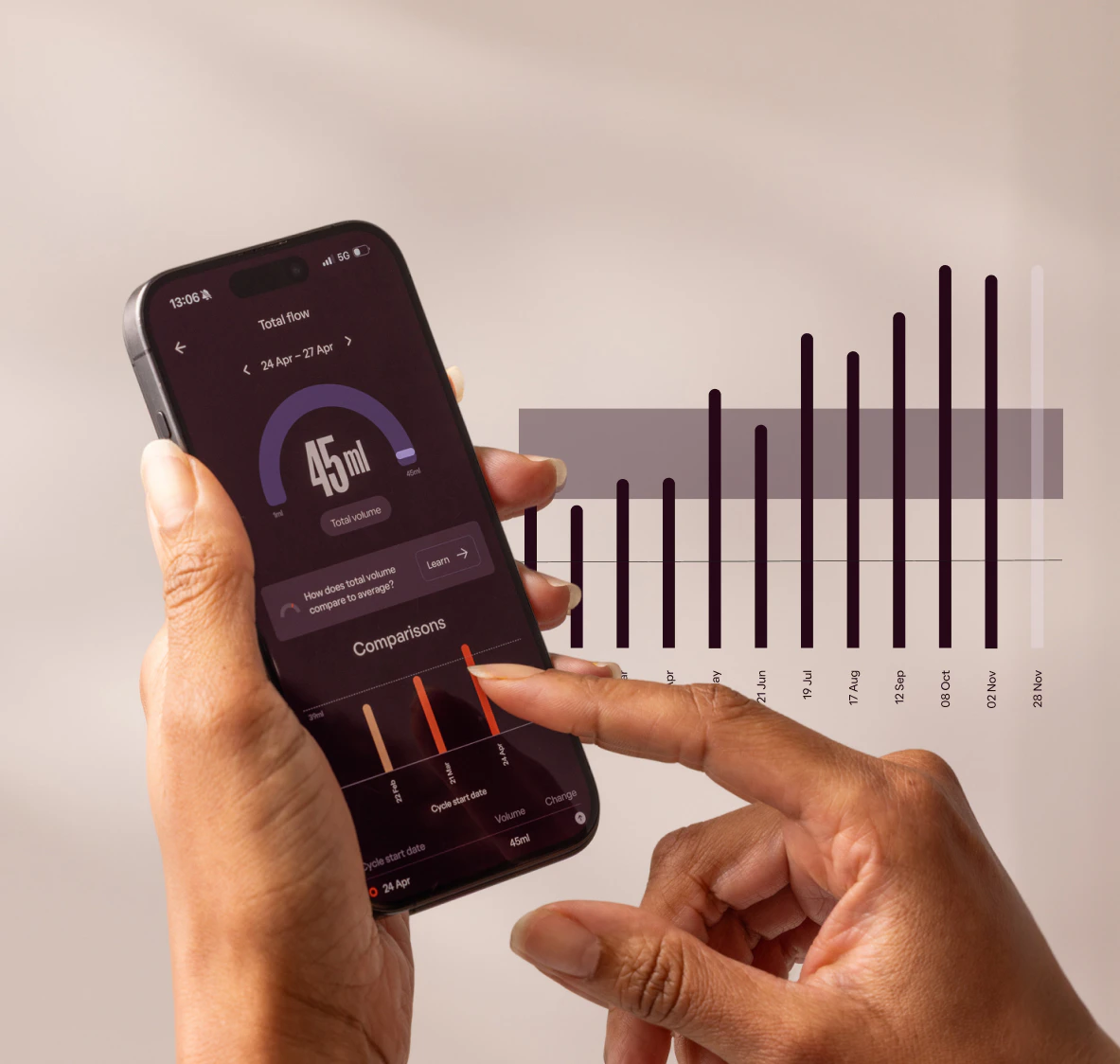
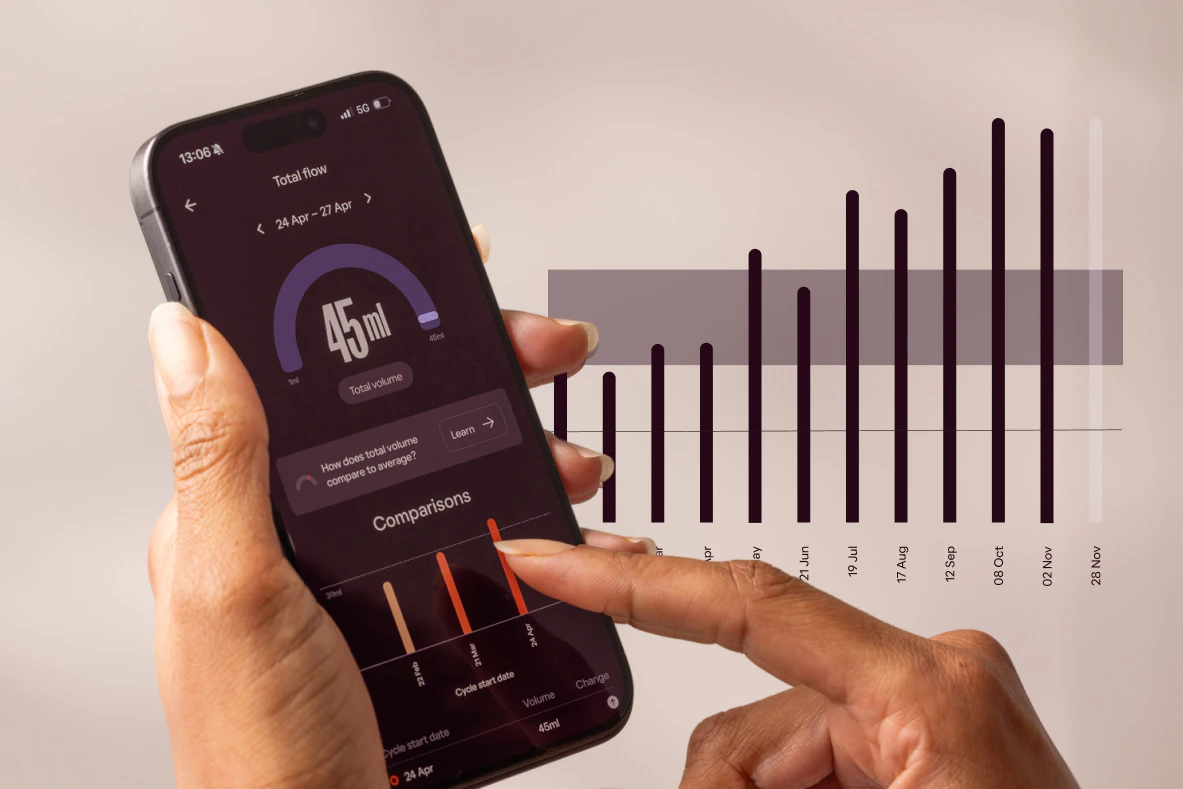
A menstrual baseline is the pattern that’s typical for your cycle - how often your period occurs, how long it lasts, how much you bleed, and how your body feels over time.
Imagine if our periods were measured and understood with the same ease and clarity as our resting heart rate. If we spoke about flow and cycle patterns with the same familiarity as sleep scores or step counts. If ‘Is this normal?’ felt easier to answer. Not because someone told us, but because we had our own data to refer to.
Why our menstrual baseline isn't always clear.
Think about the last time something in your body felt ‘off’.
Maybe your workout felt harder than usual. You checked your heart rate, compared your VO₂ max to your usual range, noticed a temperature spike. Maybe work felt unusually overwhelming. You looked at your calendar and realised you were cramming far more into the day than normal. Maybe your energy dipped more than usual in the afternoon. You checked your sleep score and saw it was lower than your average, you’d been awake more times in the night this week than last.
We instinctively look for a baseline, something steady to measure change against. It’s how we understand what’s typical for us, and how we recognise when something shifts. But when it comes to our menstrual cycle — a biological rhythm that repeats for decades — many of us are still relying on memory or general impressions. We might know when something doesn’t feel quite right, but it can be harder to describe how or why.
So instead of asking ‘Is this normal?’, we need a way to understand what’s normal for us. This is where a menstrual baseline becomes useful.
What can actually be measured?
To make it clearer, there are a few key patterns that are already used to describe periods. Large population studies—including analyses of more than 600,000 cycles—show just how much cycle length, timing, and symptoms can vary between individuals, and even from month to month.¹ While there are benchmarks, there’s no single experience that applies to everyone.
To bring structure to that variation, expert consensus has identified characteristics that are widely used in research and clinical guidance²:
- Frequency – How often we bleed
- Duration – How many days bleeding lasts
- Regularity – How consistent cycle timing is
- Flow volume – How much blood is lost
Alongside these patterns are symptoms, how your body feels across your cycle. Things like pain, fatigue, mood changes, headaches, or bloating all shape how menstruation is experienced in daily life. Together, these measurements create a clearer picture of your period and cycle over time.
So rather than asking ‘Is this normal?’, we can start to ask ‘Is this normal for me?’.
Why does your menstrual baseline matter?
When you begin to understand your typical flow and cycle patterns, you give yourself something steady to refer back to.
Over time, that reference point can help you notice:
- Whether a change feels temporary or part of a longer shift
- If certain symptoms tend to show up consistently
- How stress, travel, sleep, or exercise may influence your cycle
- Whether your bleeding pattern is gradually evolving
It’s not about drawing medical conclusions. It’s about having clearer information about what is typical for you and your body. Without that reference point, it can be difficult to know whether something is truly different, or simply part of your normal variation.
Building a clearer picture of your menstrual baseline with Emm
At Emm, we’re dedicated to making that kind of clarity possible. So understanding your body doesn’t rely on memory or estimation.
Changes in your cycle rarely happen in isolation. They may reflect shifts in sleep, stress, or routine, but can also signal underlying health conditions that need further assessment.
Knowing your menstrual baseline doesn’t eliminate change, it gives you something to measure against. Just like resting heart rate or sleep, it becomes a reference point, something you can return to, helping you recognise patterns, understand what’s shifting, and build a clearer picture of what’s normal, and abnormal, for you.
References:
1. Bull JR, Rowland SP, Scherwitzl EB, Scherwitzl R, Danielsson KG, Harper J. Real-world menstrual cycle characteristics of more than 600,000 menstrual cycles. npj Digit Med. 2019;2:83.
2. University of Edinburgh, Centre for Reproductive Health. Normal menstruation. Edinburgh: The University of Edinburgh; [cited 2026]. Available from: https://reproductive-health.ed.ac.uk/hope/about-menstruation/normal-menstruation